
What Is the Difference Between Standard and Custom Network Cabinets?
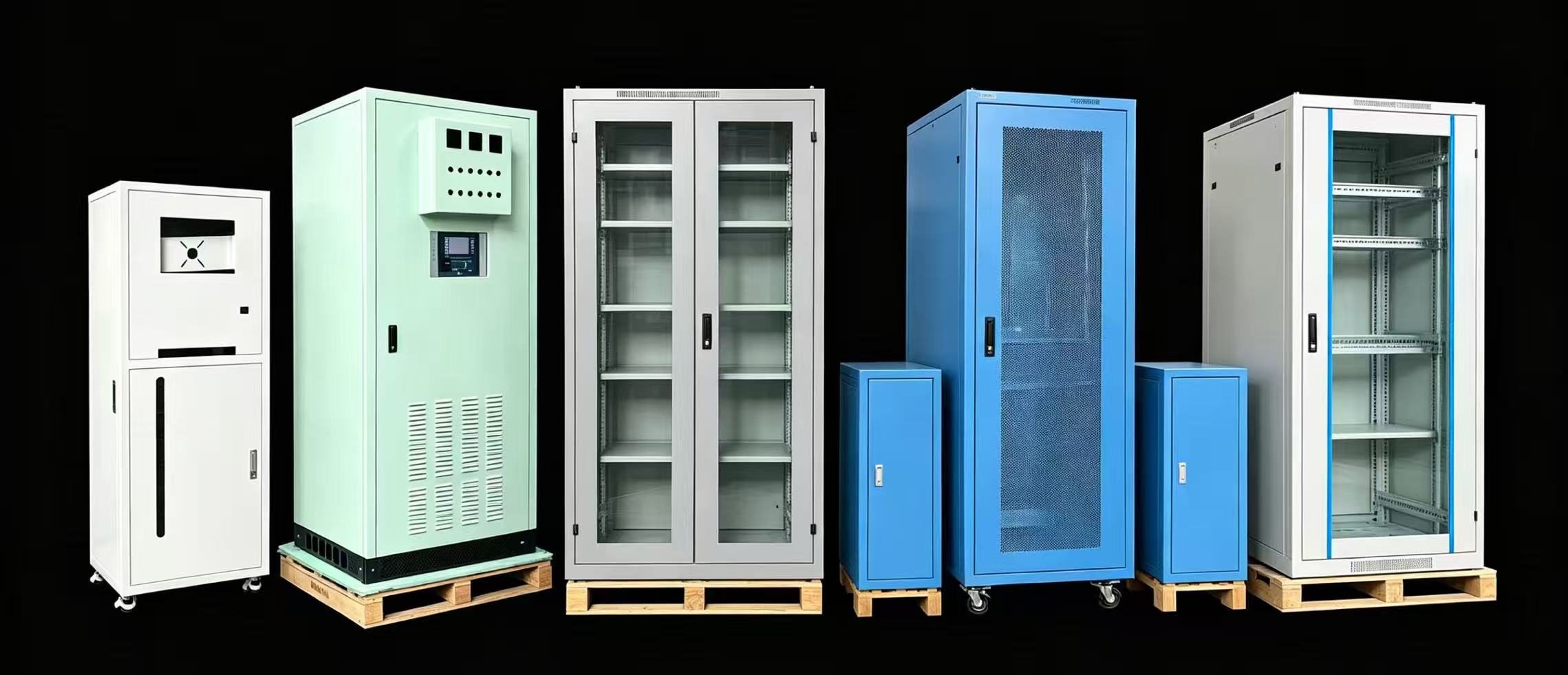
I often see buyers choose a cabinet too fast. The size looks right, but the site does not fit. Then cost and delay appear.
I define a standard network cabinet as a ready common 19-inch cabinet with fixed sizes and common parts1. I define a custom cabinet as a non-standard cabinet made by drawing, site need, equipment size, structure, color, and working environment.
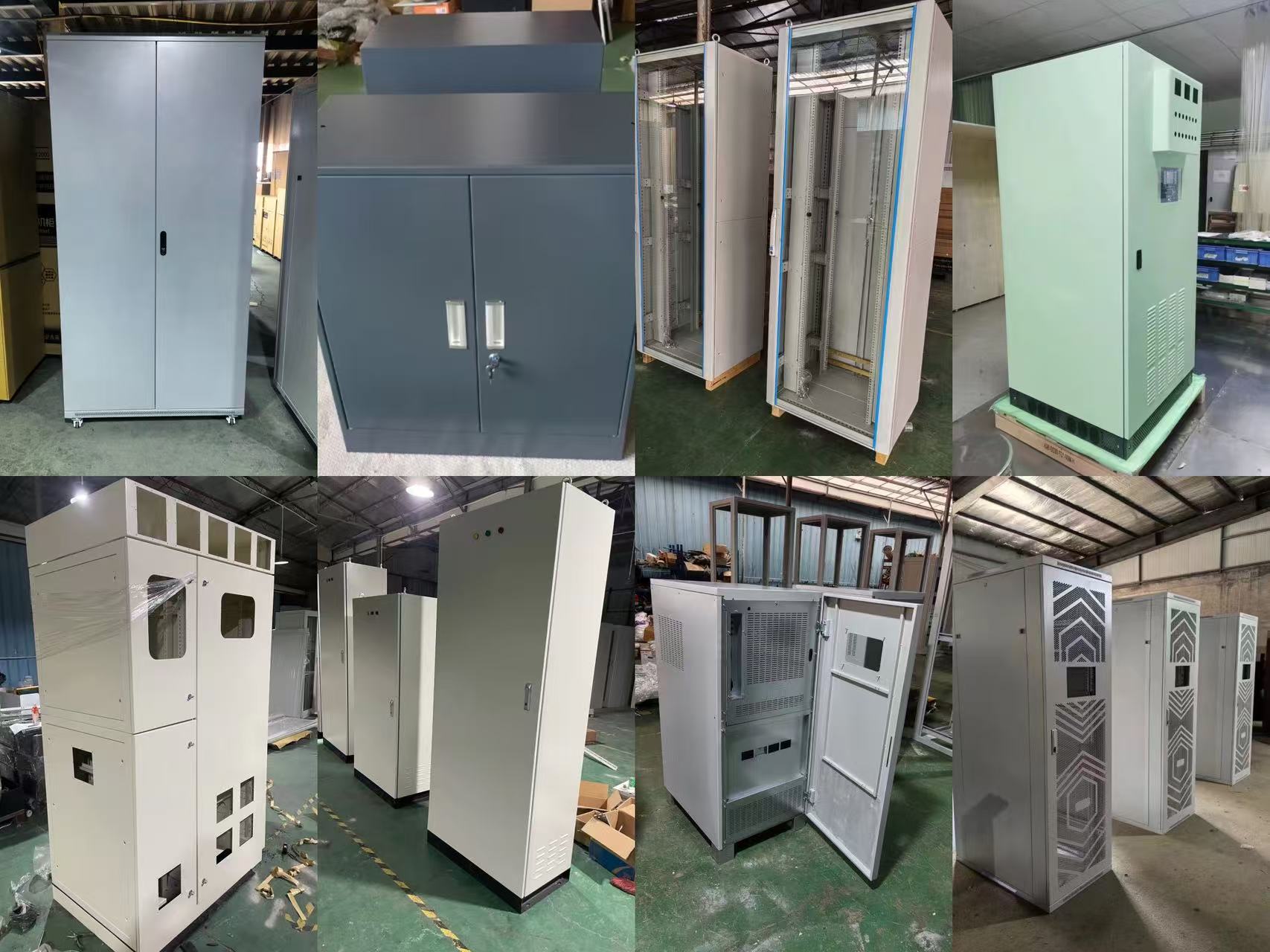
I have worked with many network, communication, monitoring, and industrial projects. I see one clear point. A cabinet is not only a metal box. It is the base for equipment layout, wiring, heat flow, safety, and later repair.2 If I choose a standard cabinet, I get fast supply and common use. If I choose a custom cabinet, I get a better match for a special site or special equipment. I need to know the difference before I place the order, because the right choice can save space, labor, and project risk.
What Is a Standard Network Cabinet?
I see many projects lose time because the buyer does not know if a normal cabinet is enough. The project starts simple, then hidden fitting problems appear.
I define a standard network cabinet as a cabinet made with common 19-inch installation rules, fixed size ranges, standard hole positions3, standard parts, and mass production methods. It fits common network equipment, weak current systems, communication devices, and monitoring devices.
I look at the standard cabinet by its rule
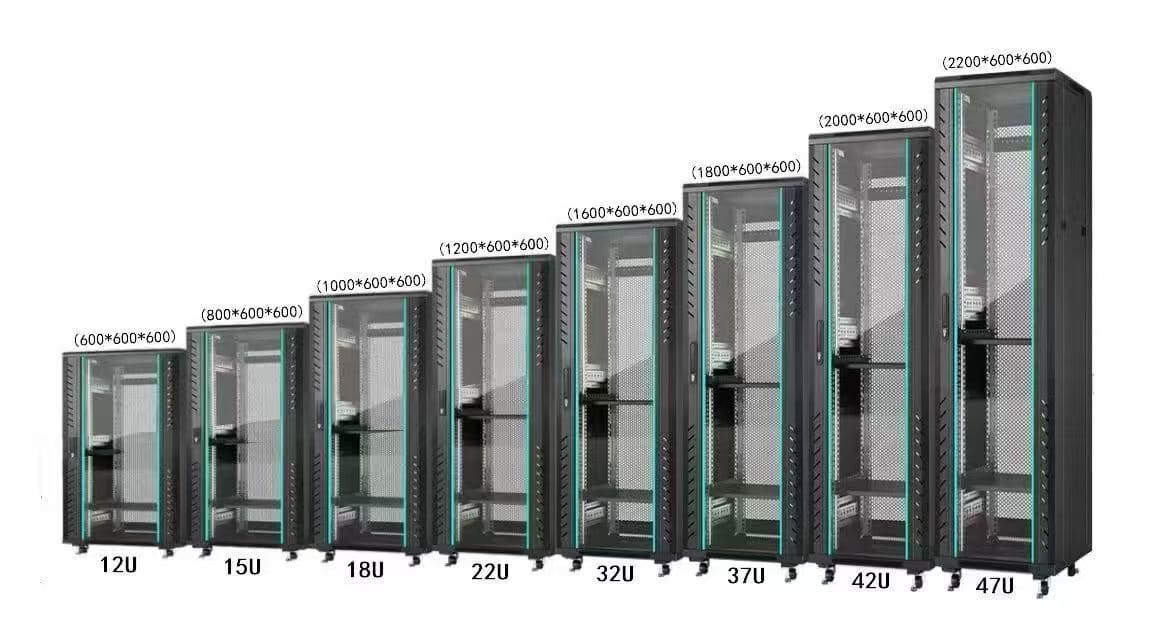
A standard network cabinet follows the international 19-inch mounting size. I use it when the equipment is made for normal rack installation. The hole position, rail layout, door style, panel design, and accessories follow common industry practice. This makes the cabinet easier to buy, easier to replace, and easier to install. I do not need a special drawing for every order. I also do not need to change the cabinet body for each device.
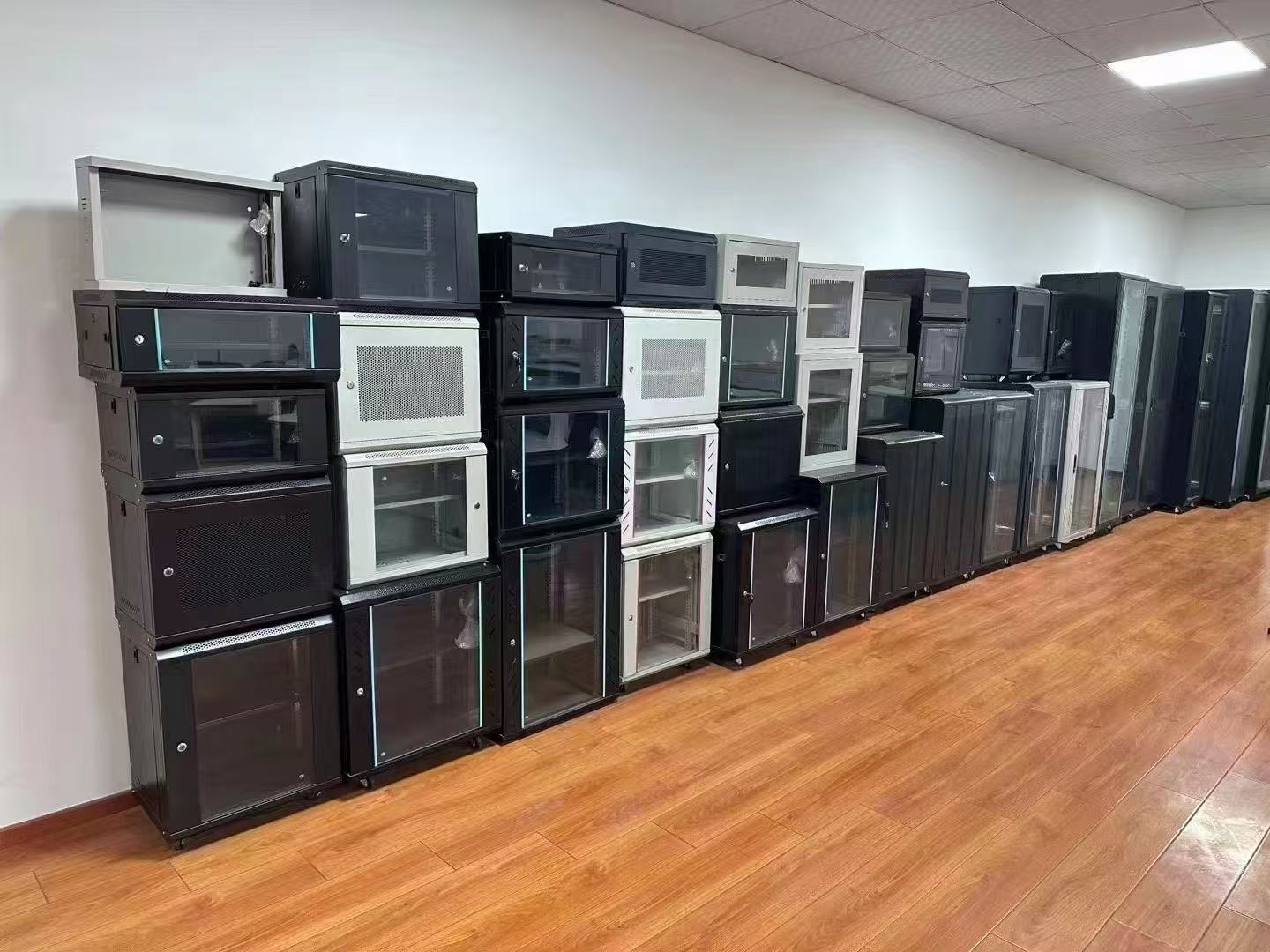
In my daily work, I often see standard cabinets used in office networks, server rooms, monitoring centers, communication rooms, and weak current projects. The common sizes include 2U, 4U, 6U, 9U, 12U, 15U, 18U, 22U, 27U, 28U, 32U, 37U, 42U, and 47U. I also see common widths such as 530 mm, 550 mm, 600 mm, and 800 mm. Common depths include 400 mm, 450 mm, 600 mm, 800 mm, 1000 mm, and 1200 mm.
| Item I Check | Standard Cabinet Feature |
|---|---|
| Mounting rule | 19-inch common standard |
| Size | Fixed common size range |
| Parts | Common shelves, fans, doors, locks, rails |
| Production | Batch production |
| Use case | Network, communication, monitoring, weak current |
| Lead time | Usually faster |
I choose a standard cabinet when the project does not need special size, special structure, or special protection. I also choose it when the site has enough space and the equipment follows the same mounting rule.
What Is a Custom Non-Standard Cabinet?
I often meet sites where a standard cabinet almost fits. That “almost” is the problem. A small mismatch can affect the whole installation.
I define a custom non-standard cabinet as a cabinet designed and made based on the customer’s site, equipment, size, structure, accessories, color, and function4. It does not need to follow fixed standard size limits.
I design the custom cabinet around the real site
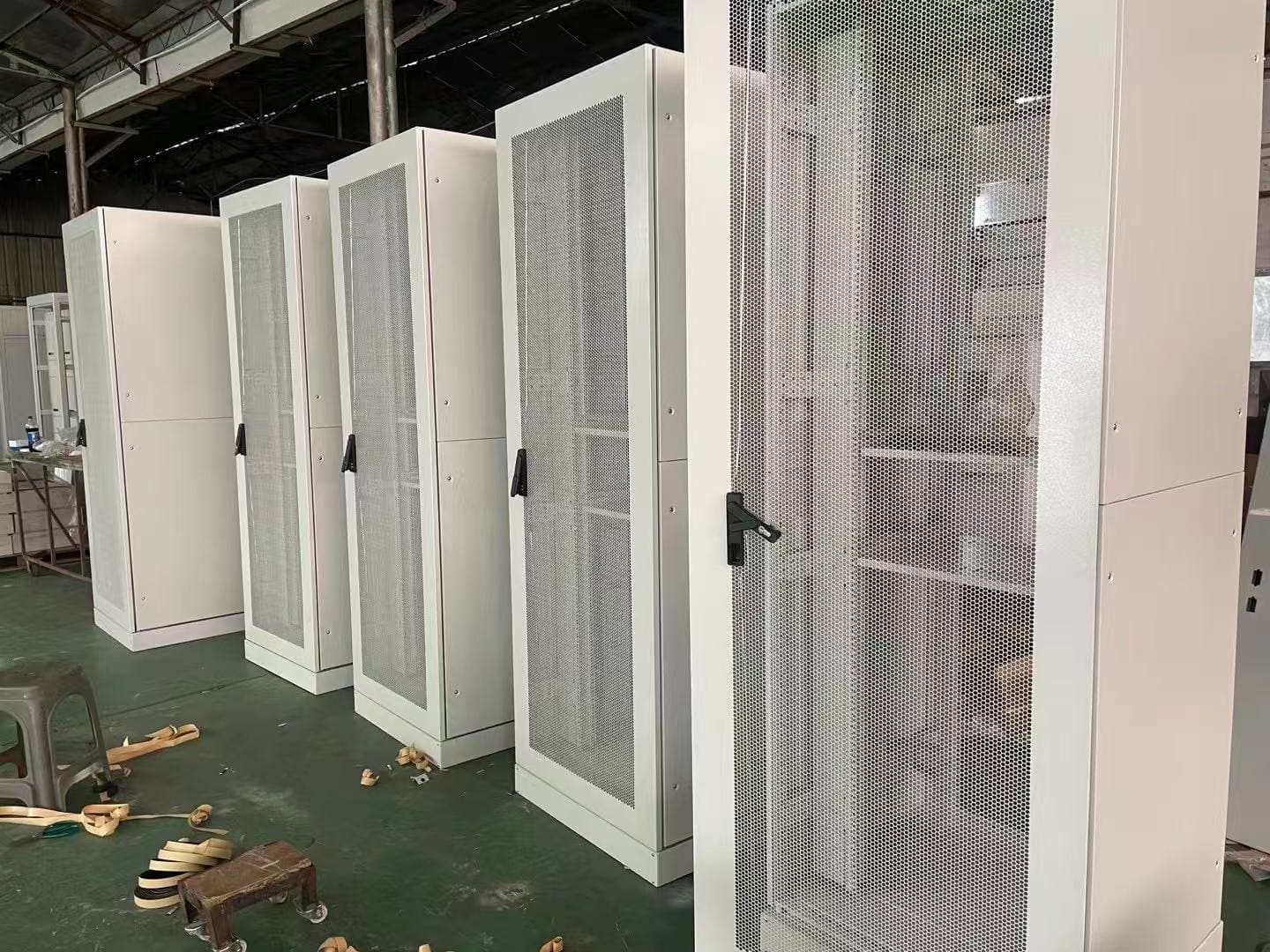
A custom cabinet starts from a real need, not from a stock size. I first look at the site space. I check the height, width, depth, wall condition, floor space, cable direction, heat flow, and device layout. Then I design the cabinet size and structure. I may change the shell shape, inner frame, mounting rails, door type, base, top cover, cable holes, fan position, and color.
I often use custom cabinets when the equipment is not a normal 19-inch device. I also use them when the cabinet needs special waterproof, anti-rust, anti-corrosion, dustproof, reinforced load-bearing, or outdoor use design.5 A custom cabinet can be made as one piece. It can also be made for a small batch. I confirm drawings before production. Then I cut, bend, weld, coat, assemble, and test6 based on that design.
| Custom Point I Can Change | Example |
|---|---|
| Size | Any height, width, depth |
| Door | Mesh door, glass door, steel door, double door |
| Structure | Reinforced frame, special bracket, movable rail |
| Surface | Powder coating, anti-rust treatment, outdoor coating |
| Installation | Wall-mounted, floor-standing, base-mounted |
| Function | Waterproof, ventilation, cable routing, load support |
A custom cabinet usually needs more time than a standard cabinet.7 I need drawing work, detail checking, and separate production steps. But the result is more accurate. I use custom design when the cabinet must match the site, not when the site must accept the cabinet.
How Are the Sizes and Structures Different?
I see many buyers focus only on height. They forget width, depth, inner space, cable space, and door opening space. Then the cabinet cannot work well.
I compare standard and custom cabinets by size freedom and structure freedom. A standard cabinet uses common U height and fixed width and depth. A custom cabinet can change almost every size and inner layout based on equipment and site.
I separate outside size from inside structure
A standard cabinet has a clear size system. It uses U height for equipment mounting. One U equals 44.45 mm.8 This makes standard equipment easy to install. I can choose a 6U wall cabinet for a small network project. I can choose a 42U floor-standing cabinet for a server room. I can choose 600 mm width for common wiring. I can choose 800 mm width if I need more side cable space.
A custom cabinet is different. I can set the outside size based on the site. I can set the inside space based on the equipment. I can move the rails. I can add special shelves. I can make non-standard holes. I can add inner partitions. I can increase steel thickness for load. I can also change the rear door, side panel, bottom entry, or top cable entry.
| Comparison Item | Standard Cabinet | Custom Cabinet |
|---|---|---|
| Height | Common U sizes | Free design |
| Width | Common 530, 550, 600, 800 mm | Free design |
| Depth | Common 400 to 1200 mm | Free design |
| Rail position | Standard 19-inch layout | Adjustable or special layout |
| Inner brackets | Common accessories | Made for actual equipment |
| Cable holes | Fixed common design | Made by cable route |
I always tell customers that outside size is only one part. The inner usable space is more important. A cabinet can look large, but the equipment may still not fit if the rails, cable space, or door depth are wrong9. This is why I ask for device size, wiring direction, and site photos before I suggest a custom design.
How Are the Production Time and Cost Different?
I have seen orders delayed because the buyer expected a custom cabinet to be as fast as a stock cabinet. The process is not the same.
I explain the time difference in a simple way. A standard cabinet is made from fixed drawings and common parts, so production is faster. A custom cabinet needs drawing, confirmation, separate cutting, bending, assembly, and testing, so it usually takes longer.
I see time as part of the design choice
A standard cabinet is a flow-line product. The factory already has common drawings, materials, punching data, bending data, and assembly steps. Workers know the process. The cabinet parts are common. This makes the production stable and fast. If I need a common wall-mounted network cabinet or a common floor-standing server cabinet, I can often arrange it quickly.
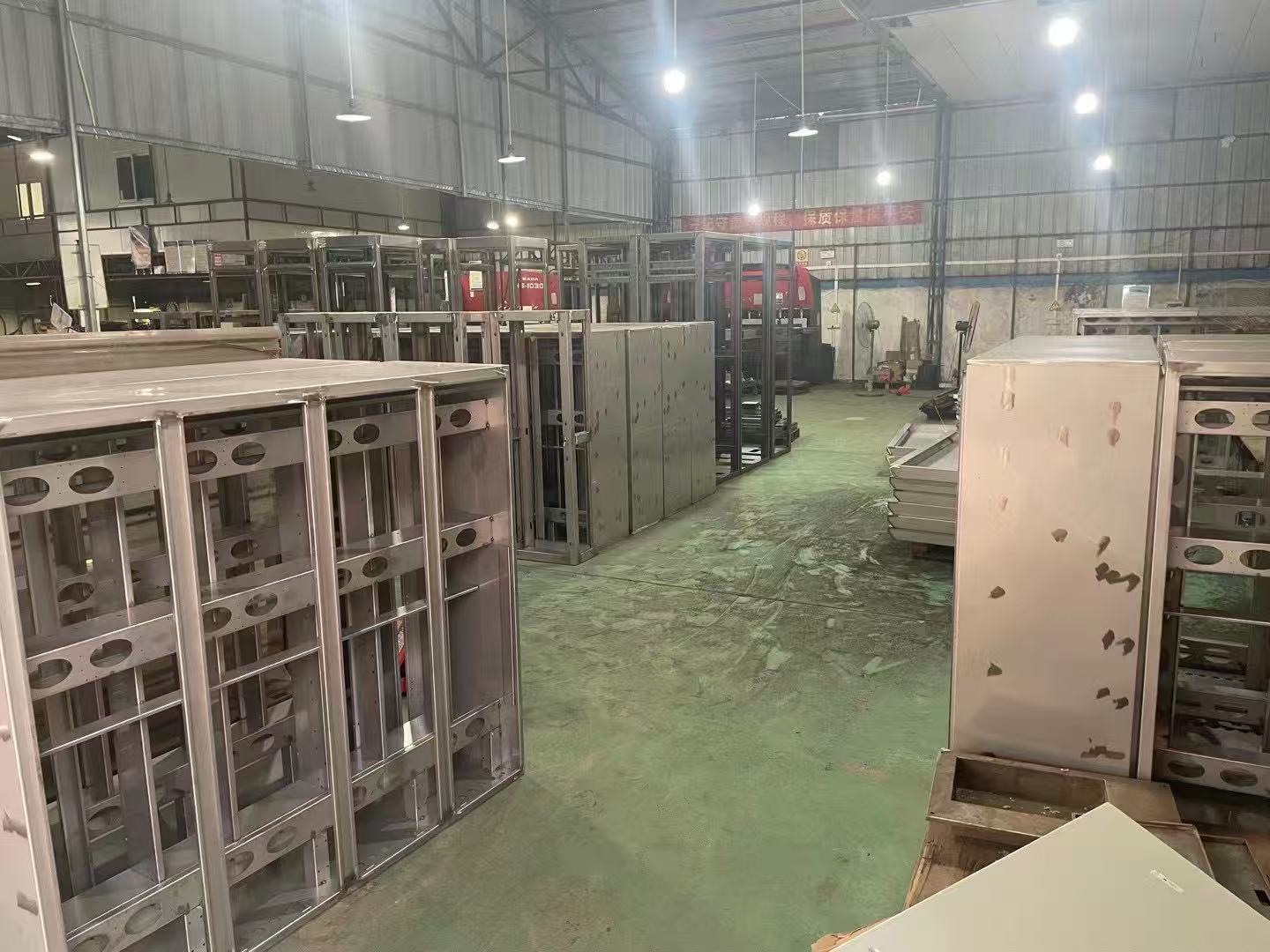
A custom cabinet needs more steps. I first collect the need. Then I make or confirm the drawing. I check size, hole position, structure, door style, accessories, and surface color. After approval, I arrange laser cutting, CNC bending, welding, grinding, powder coating, assembly, and inspection. If one detail changes, the drawing and production plan may change too.
| Process Step | Standard Cabinet | Custom Cabinet |
|---|---|---|
| Drawing | Existing drawing | New or modified drawing |
| Material prep | Common material plan | Based on project need |
| Cutting | Regular program | Separate cutting program |
| Bending | Fixed process | Special bending need |
| Assembly | Common parts | Custom parts and fitting |
| Inspection | Standard checklist | Standard plus custom check |
Cost is also different. A standard cabinet usually has a lower unit cost because it is made in batches.10 A custom cabinet may cost more per piece because it uses separate design and production work. But I do not only look at the cabinet price. I also look at installation cost, site changes, equipment safety, and future repair. If a standard cabinet causes site modification, the total cost can become higher. If a custom cabinet avoids these problems, it may be the better choice.
Which Cabinet Fits Different Working Environments?
I often see the wrong cabinet used in the wrong place. Indoor, outdoor, power, factory, and monitoring rooms all ask for different protection.
I choose a standard cabinet for common indoor environments and standard equipment. I choose a custom cabinet for special sites, outdoor use, harsh conditions, limited space, special load, or unusual equipment layout.
I match the cabinet to the place of use
A standard network cabinet works well in many normal indoor rooms. These rooms include office weak current rooms, small server rooms, monitoring rooms, and communication rooms. The environment is usually dry. The temperature is more stable. The cabinet mainly needs equipment support, cable management, ventilation, and basic safety11. A mesh door or glass door is often enough. Common fans, shelves, power distribution units, and cable managers can meet the need.
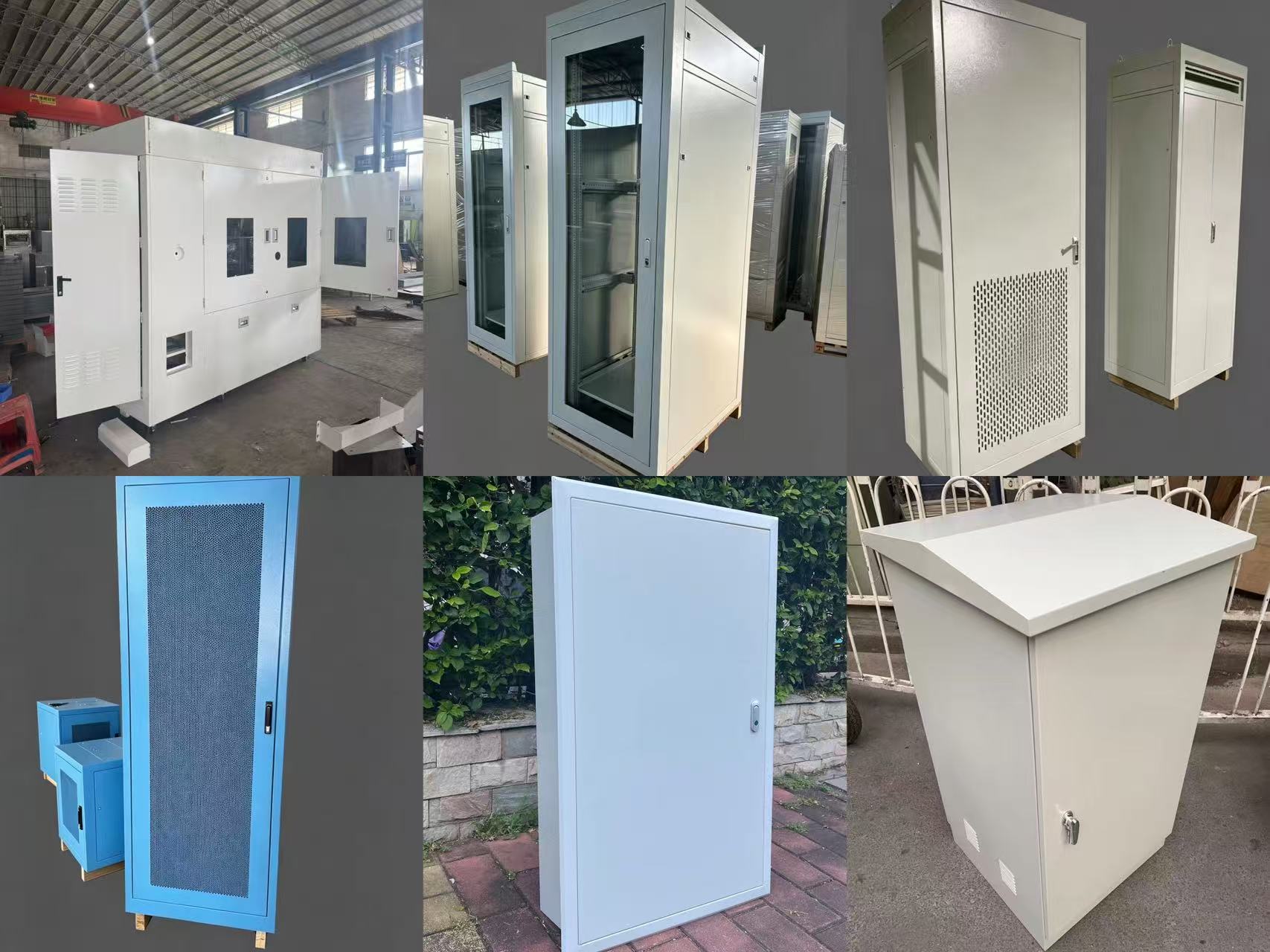
A custom cabinet becomes important when the environment is not normal. Outdoor sites may need waterproof design, rain cover, sealing strips, special coating, and anti-rust treatment. Industrial sites may need stronger steel, thicker panels, special ventilation, dust control, or reinforced base. Power and energy projects may need special inner brackets, safety spacing, or stronger load support.12 Security projects may need a monitoring console, TV wall, or special access control layout.
| Environment I Check | Better Choice | Reason |
|---|---|---|
| Office network room | Standard cabinet | Common equipment and stable room |
| Communication project | Standard or custom | Depends on equipment and site |
| Monitoring center | Standard or custom | Depends on console and screen layout |
| Outdoor site | Custom cabinet | Waterproof and anti-rust need |
| Industrial site | Custom cabinet | Load, dust, and structure need |
| Power facility | Custom cabinet | Safety space and special layout need |
I ask one simple question before I choose. Does the cabinet only need to hold standard equipment, or does it need to solve a site problem? If it only holds standard equipment, I often choose a standard cabinet. If it must solve a special space, safety, heat, water, rust, or load problem, I choose a custom cabinet.
-
Conclusion
I choose standard cabinets for common 19-inch projects. I choose custom cabinets when the site, equipment, function, or environment needs a precise fit.
"19-inch rack - Wikipedia", https://en.wikipedia.org/wiki/19-inch_rack. IEC 60297 and EIA-310 define mechanical dimensions for 19-inch rack and cabinet systems, supporting the article’s description of standard network cabinets as products built around common 19-inch mounting dimensions. Evidence role: definition; source type: institution. Supports: A standards-based source should support that 19-inch rack systems use defined mechanical dimensions for equipment mounting.. Scope note: These standards define mounting geometry, not every commercial cabinet size or accessory. ↩
"[PDF] Infrastructure Standard for Telecommunications Spaces", https://www.cfm.va.gov/til/dguide/OIT-InfrastrucStdTelecomSpaces.pdf. Data-center and telecommunications infrastructure guidance treats racks and cabinets as part of the physical system affecting cable routing, airflow management, equipment access, and safety controls. Evidence role: expert_consensus; source type: institution. Supports: Infrastructure guidance should support that racks and cabinets influence airflow, cable routing, equipment access, and safety practices.. Scope note: Such guidance supports the general mechanism, not the performance of any specific cabinet design. ↩
"19-inch rack - Wikipedia", https://en.wikipedia.org/wiki/19-inch_rack. EIA-310 and IEC 60297 specify dimensional requirements for 19-inch rack mounting arrangements, including rail and hole-spacing conventions used for equipment compatibility. Evidence role: definition; source type: institution. Supports: A rack standard should support the existence of specified mounting-hole spacing and rail geometry.. Scope note: The standards support the mounting interface, while door styles and accessories may still vary by manufacturer. ↩
"Streamlining the ETO Manufacturer - Engineer To Order", https://totaleto.com/white-papers/streamlining-the-eto-manufacturer/. Research on engineer-to-order manufacturing describes products whose design and production are driven by customer-specific requirements, providing context for defining custom cabinets as site- and equipment-specific products. Evidence role: definition; source type: paper. Supports: Manufacturing literature should support that engineer-to-order products are designed or configured around customer-specific requirements.. Scope note: This evidence is contextual and does not prove the exact workflow of a particular cabinet factory. ↩
"NEMA Ratings for Enclosures", https://www.nemaenclosures.com/enclosure-ratings/nema-rated-enclosures/?srsltid=AfmBOor0vNEK0hIH9QbQT7rS_7kou87RlzlCjH8cN9-7OMgmmTwzQsqP. IEC 60529 and NEMA enclosure-rating guidance classify enclosures by protection against dust, water ingress, corrosion, and outdoor exposure, supporting the need for environment-specific cabinet protection features. Evidence role: expert_consensus; source type: institution. Supports: Enclosure standards should support the use of water, dust, corrosion, and outdoor protection measures for cabinets in exposed environments.. Scope note: These ratings describe protection categories; they do not determine which exact cabinet construction is sufficient for every site. ↩
"Metals Lab - Taubman College - University of Michigan", https://taubmancollege.umich.edu/about/facilities/metals-lab/. Engineering descriptions of sheet-metal fabrication identify cutting, forming or bending, joining such as welding, surface finishing, and assembly as common steps in producing metal enclosures. Evidence role: mechanism; source type: education. Supports: An educational or engineering source should support the general sequence of sheet-metal fabrication and finishing steps.. Scope note: The sequence may vary depending on design, materials, and factory equipment. ↩
"Why Focusing on Lead Time, Not Just Efficiency and Cost ...", https://interpro.wisc.edu/lead-time-drives-manufacturing-success/. Manufacturing research distinguishes make-to-stock production from engineer-to-order production and notes that customer-specific design and planning activities can extend lead times for customized products. Evidence role: mechanism; source type: paper. Supports: Manufacturing literature should support that engineer-to-order or customized production often requires additional design, approval, and planning time compared with make-to-stock production.. Scope note: The evidence supports the general production mechanism, while actual lead time depends on supplier capacity and design complexity. ↩
"Rack unit - Wikipedia", https://en.wikipedia.org/wiki/Rack_unit. Reference descriptions of 19-inch rack systems define one rack unit, or 1U, as 1.75 inches, equivalent to approximately 44.45 mm. Evidence role: definition; source type: encyclopedia. Supports: A reference source should confirm the standard height of one rack unit.. ↩
"19-inch rack - Wikipedia", https://en.wikipedia.org/wiki/19-inch_rack. Rack-installation and data-center design guidance identifies mounting depth, cable-management clearance, and access space as factors that affect whether equipment can be properly installed in a cabinet. Evidence role: mechanism; source type: institution. Supports: Rack installation guidance should support that equipment installation requires adequate mounting depth, cable-management clearance, and front or rear access clearance.. Scope note: The source would support general fit considerations rather than validating a specific cabinet layout. ↩
"Economies of scale - Wikipedia", https://en.wikipedia.org/wiki/Economies_of_scale. Manufacturing economics literature explains that larger production batches can reduce average unit costs by spreading setup, tooling, and design costs over more units. Evidence role: mechanism; source type: paper. Supports: An economics or manufacturing source should support that spreading fixed setup and design costs across larger production batches can lower average unit cost.. Scope note: This supports the general cost mechanism, not the price of any specific cabinet model. ↩
"271116i.docx", https://www.cfm.va.gov/TIL/spec/271116i.docx. Telecommunications and data-center infrastructure guidance describes racks and cabinets as physical supports for equipment that also organize cabling, allow airflow, and support safe installation practices. Evidence role: general_support; source type: institution. Supports: A telecommunications or data-center infrastructure source should support the common functions of racks and cabinets in indoor equipment rooms.. Scope note: The evidence supports typical functions and does not establish that every indoor cabinet provides all functions equally. ↩
"Guidelines to the construction of a low-voltage assembly ...", https://library.e.abb.com/public/105430996deb410f9afccfd479126026/1SDC007110G0202.pdf. Electrical assembly standards such as IEC 61439 address internal arrangement, insulation clearances or creepage distances, and mechanical considerations for low-voltage power assemblies, supporting the need for specialized cabinet design in power applications. Evidence role: expert_consensus; source type: institution. Supports: Electrical equipment standards should support that power enclosures consider internal arrangement, insulation spacing, and mechanical strength.. Scope note: This contextual support concerns electrical assemblies broadly and may not apply to all low-current network cabinets. ↩
